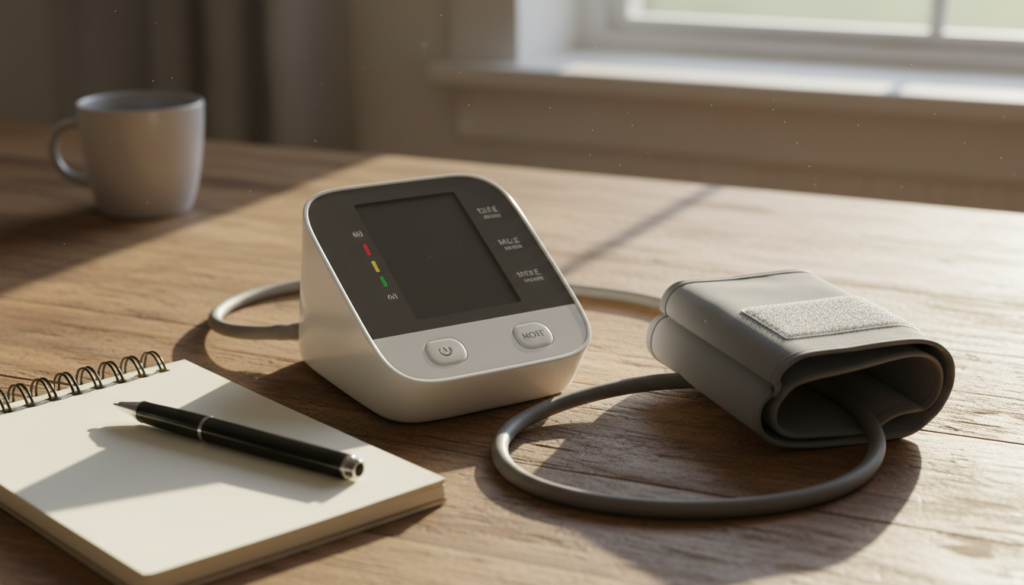
For a more reliable home blood pressure reading, use a validated upper-arm monitor with a cuff that fits. Rest quietly for at least five minutes, then take two readings one minute apart. A consistent setup makes it easier to compare your readings over time.
Set up before pressing Start
Choose a chair with back support and a table where you can rest your arm at heart height. A folded towel can help raise your arm if the table is low. Sit with both feet flat and your legs uncrossed. Wrap the cuff around your bare upper arm according to your monitor’s instructions.
Give yourself a few quiet minutes
The American Heart Association recommends avoiding caffeine, smoking, and exercise for 30 minutes before measuring. Empty your bladder first. Once seated, rest for at least five minutes and stay quiet while the cuff measures your pressure.
Write down both readings
Take a second reading one minute after the first. Record both along with the date and time. If your healthcare professional gave you a measurement schedule, follow it and bring the log to your next visit. Ask them to check your cuff fit and show you how to use your monitor if you’re unsure.
What this looks like on a busy morning
Say you come back from walking the dog and plan to check your pressure. Wait until at least 30 minutes have passed since the walk and take the reading before your coffee. Sit quietly for five minutes, take both readings, and write them down together. If you measured right after a walk on another day, add that detail to the log so you can explain the difference in setup.
Keep your setup consistent
Use the same chair and table when you can. Keep the cuff and log together so recording both readings takes less effort. Home readings can help you discuss patterns with your healthcare professional. Keep taking prescribed blood pressure medication unless your healthcare professional tells you to change it.
For illustrated instructions and guidance on when to seek help for a very high reading, see the American Heart Association’s home blood pressure monitoring guide.