Reduced sodium means a product has at least 25% less sodium than its regular counterpart. Low sodium generally means 140 milligrams or less per serving. A product can have less sodium than the original and still contain considerably more than 140 milligrams.
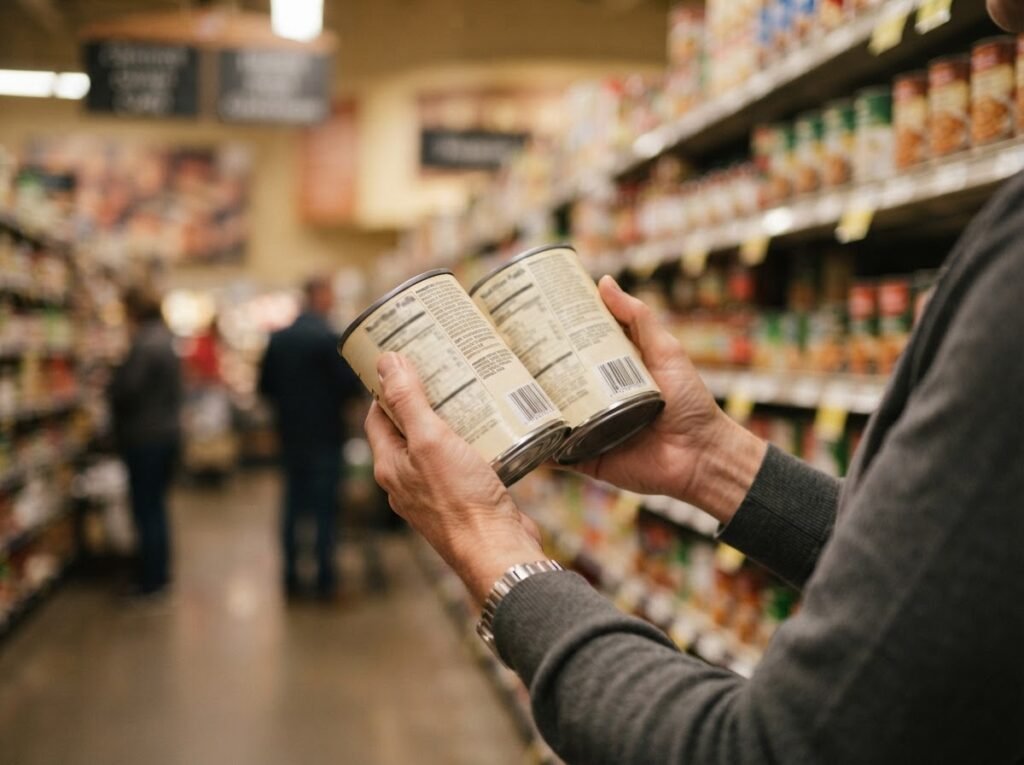
Compare two cans of soup
Suppose a regular soup has 800 mg of sodium per cup and its reduced-sodium version has 600 mg per cup. That’s a 25% reduction. A different soup with 130 mg per cup has much less sodium per cup than either version. The numbers on the Nutrition Facts label make that difference easy to see.
Check how much you’ll eat
If the reduced-sodium soup lists 600 mg per cup and you eat a two-cup can, you’ll consume 1,200 mg. When labels list different serving sizes, compare the same amount of food or the portion you would actually eat.
What no salt added tells you
This claim refers to salt added during processing. Ingredients can already contain sodium. Check the milligrams on the Nutrition Facts label to see how much is in the finished product.
See the FDA’s guide to sodium label claims and Giamond’s guide to reading Nutrition Facts labels.